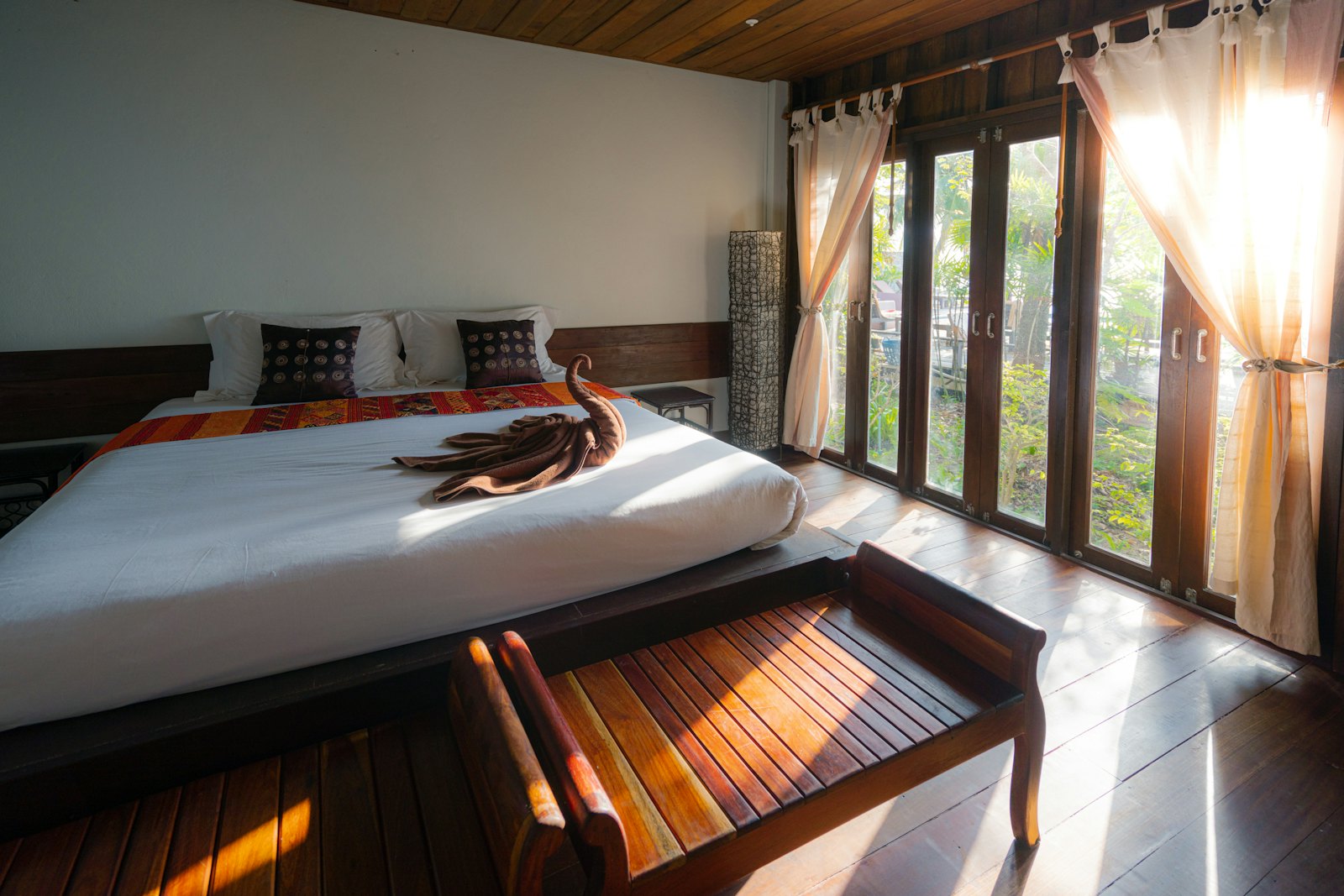
After thirteen weeks at Pomar na Praia in Fuseta, the recommendation I give most often is two-shaped — Pomar for the first-time workationer, the Algarve generally for the second-time one. It is a deliberately asymmetric answer, and the reason it works the way it does is structural rather than aesthetic. This is the version with the reasons.
The headline is short. A structured coliving is the right configuration for a first workation because most of the failure modes of a first workation are problems structure removes. By the second workation, the failure modes have moved on, and structure starts to constrain rather than enable. The transition between the two is somewhere around the end of the first stay, and it is not the same week for everyone.
What structure does for the first-timer
A first workationer is failing in a small number of predictable ways. They underestimate the loneliness of working from a foreign apartment alone. They overestimate their own ability to self-organise meals, workouts, and weekend exits when the working week is the only fixed point. They underestimate how much of their German or American or British working week was held together by ambient social cues — colleagues, gym friends, a Thursday-night-regular — that don’t transport with them. They book a beautiful Airbnb and discover that beauty does not produce dinner conversation.
A structured coliving — Pomar’s shape specifically — removes most of these failure modes by design:
- A community manager plans a weekly programme — family dinners, CrossFit-inspired workouts, yoga, ice baths, breathwork, cooking classes, occasional orange picking [source: pomar-coliving.com]. You don’t have to organise anything to have a dinner table on Tuesday.
- A 28-night minimum [source: pomar-coliving.com] filters the cohort to people committed enough that the social weight is real. Three-night travellers don’t dilute the room.
- Shared meals — at Pomar a family dinner once a week with classic Portuguese food, plus the spontaneous dinners that emerge — provide the social anchor that the apartment-alone shape cannot.
- An open-air gym and a community workout schedule give a structure to the body’s week that solo Airbnb stays almost never produce.
- A founder presence on-site — both Pomar founders were around regularly — means operational issues get fixed in hours rather than emails.
For employed readers this matters because the working week is structurally fragile in a new environment, and the right structure outside work protects the structure inside it. For freelance readers, the same structure removes the daily decision tax that erodes a working week — what to eat, where to work, who to see — and lets the work be the thing you decide on.
What I actually used it for
Across thirteen weeks, the structural pieces I used most:
- The community workout, two or three times a week — the single most useful piece for me, and a piece I would not have replicated in a solo apartment.
- The family dinners — Portuguese mains in the early weeks, a Mexican fusion night, pizza parties at the end — none of which I would have hosted or attended in an apartment shape.
- The open-air gym — kettlebell, bands, mats, the cold-plunge pool routine that started in week six — almost daily for the second half of the stay.
- The community manager’s planning — weekly Tuesday meetings to plan the week — produced the kind of cohort coordination that doesn’t happen organically.
- The on-site founders’ presence — when a room rotation needed handling in week nine, the operational friction was small because the people who could fix it lived there.
None of these are universal needs. All of them are first-workationer needs, and most of them are needs that solve themselves by the second trip.
Why the second trip is different
By the end of thirteen weeks at Pomar, I had built operating routines that no longer required the structure to maintain. The morning Ria Formosa run was self-driven by then. The workout pattern had become a habit. The weekly market run was scheduled. The cohort was real but its main social value had been delivered — the friendships were in place, the dinner-table conversations were familiar, the patterns of who to call when.
For the second Algarve trip, the structure that produced these patterns is no longer the binding constraint. The constraint becomes the opposite — the structure that initially enabled the patterns can start to constrain how they evolve. The Tuesday community meeting is genuinely useful when you don’t know how to plan a week; by the second stay you have a week you know how to plan, and the meeting becomes mildly inflexible.
A second Algarve trip — an apartment in Olhão or Tavira, a long-stay rental in Fuseta, a different shape entirely — lets the pattern continue without the scaffolding. You go back to the Saturday market because it’s now your Saturday market. You hit Nanobrew on a Tuesday night not because it’s on the cohort’s calendar but because you know which nights are the good ones. You take the regional train without checking with anyone about whether they’re going too.
For whom the second trip is wrong
A few cases where I would still recommend the structured-coliving shape:
- A first stay shorter than four weeks. You haven’t built the patterns yet; the structure is still earning its place.
- A solo workationer who is socially exhausted at the end of the workday. The coliving carries social weight; the apartment doesn’t. Both work for different temperaments.
- A workationer with no Portuguese. The community manager and the on-site cohort translate the operational and social context that an apartment-alone stay won’t. The Portuguese-language depth of a long-stay rental is real and beats no Portuguese; the structured coliving in the meantime is the bridge.
For employed readers, the second-trip recommendation matters because the value-of-time calculation shifts — the time previously spent on structure-substitute (finding a gym, organising a dinner) is now spent on more productive things. For freelance readers, the cost calculation shifts in the same direction — the per-week cost of an apartment is usually meaningfully lower than the per-week cost of a coliving, and by the second trip the difference is no longer paying for value you need.
The thing nobody tells you about the transition
The transition between needing structure and not needing it is not the end of one trip. It is somewhere in the third quarter of the first trip — for me, around week nine, when a room rotation moved me out of the building for a week and the week-without-cohort exposed how much of my training motivation was social rather than internal. That week was useful information; it was not the moment I stopped needing the structure. The moment was about two weeks after the trip ended, when the patterns held without the building around them.
When this would have failed
This article assumes a workationer with the temperament to live in a small shared house for thirteen weeks, the income to absorb a coliving’s price premium over a Fuseta apartment, and the openness to letting other people set part of the week’s rhythm. If any of those don’t hold, the structured-coliving shape will fail and the second-trip recommendation will arrive earlier than it did for me.
The right configuration is to start where the structure helps you, stay long enough to absorb the patterns, and then trust those patterns enough to come back without the scaffolding. The Algarve is structurally easy enough that the second trip works almost anywhere on this coast.