Fuseta in February is the workation nobody writes about, for reasons that are wrong. The reasons are: it rained a lot, the temperature was lower than the Algarve marketing suggests, and the town was visibly half-shut for the off-season. All three are true. None of them disqualified the working stay; in some weeks they were the structural reason it worked.
The headline is small. February in this town will give you weeks where 88 mm of rain falls across seven straight wet days and where the wind gusts above 94 km/h, and it will also give you the kind of focused working stretches that the same coast cannot deliver in July. The trade is real, and most workation writing — which is written by people who travel in May — pretends it isn’t.
What February actually delivered
Across four February weeks, in order:
- Week 4 (26 Jan – 1 Feb): 48 mm rain, 10–18°C, gusts to 98 km/h. Wettest week of the trip so far.
- Week 5 (2–8 Feb): 88 mm rain over seven wet days, 9–17°C, gusts to 94 km/h. Wettest week of the stay.
- Week 6 (9–15 Feb): 12 mm rain, 8–18°C, gusts to 74 km/h. The first lighter week.
- Week 7 (16–22 Feb): 0 mm rain, 9–18°C, gusts to 36 km/h. The pivot week — Carnival in Loulé, the first beach workout.
That sequence ran well above the 30-year February normal for Faro of about 60 mm across 7 days [source: ipma.pt] — February 2026 was unusually wet, not the structural shape. The wet weeks are not gentle. The dry week makes the wet weeks worth waiting for.
What the wet weeks did, against expectation, was concentrate work. There is something specific about a 12-week stay where the first six weeks have weather bad enough that you don’t want to be outside — the working day extends, the focus deepens, the social life moves indoors and becomes denser rather than thinner. The coliving dinner table replaces the beach as the centre of gravity. The structural insight is that bad weather in a good coliving is not the same as bad weather in a hotel room.
What kept the working week going
Three things, in order of structural importance.
The first was the fibre line. I have written elsewhere about the gigabit FTTH at the coliving that held across the storm weeks; the relevant point here is that during week five — 88 mm of rain, gusts to 94 km/h — no video call dropped and no upload failed. That is not common in southern European coastal towns in storm weather, and it is the single fact that distinguishes Fuseta in February from any number of charming coastal towns where the working week would have collapsed.
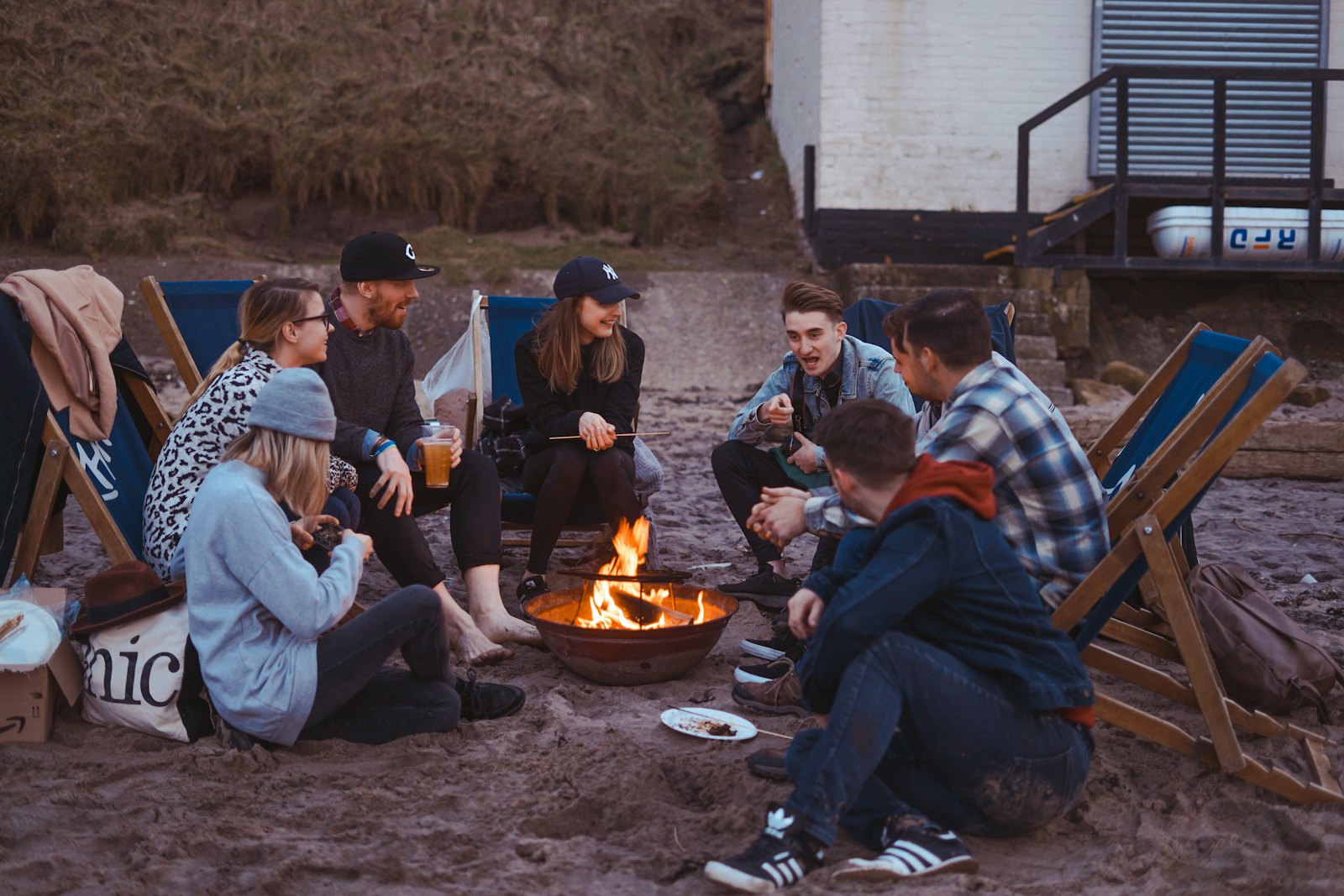
The second was the cohort. February in Fuseta is when the coliving runs at its smallest headcount — by my count we were six to eight people most of the wet weeks, against twelve to fourteen by April. A small cohort in bad weather is a tighter cohort, and what the wet weeks produced was real: dinner conversations, hypnotherapy skill-shares, movie nights with blankets on the terrace, a Carnival visit to Loulé, the start of regular Nanobrew evenings. None of that scales to a 14-person July week. All of it scales perfectly to a 6-person February week.
The third was the absence of tourism overlay. The town in February is operating for its residents — the bakery opens at the time the fishermen want, the market sells what is in season for the locals, the brewery has the regulars at the bar. As a workationer this means you are inside a working town, not on top of one. The Saturday market in Olhão runs at its real size in February, and you can see how the trade actually works without the summer photograph-and-leave traffic.
The two days that didn’t work
For honesty: there were two specific days in the worst week I worked badly. One was a Wednesday with a four-hour storm — Storm Leonardo, which hit the Algarve on Feb 4 with gusts up to 90 km/h in Faro [source: ipma.pt] — that knocked the focus out of a video call I should have been more present for. The other was a Friday where I went to Olhão for a working day and the rain on the train windows turned the carriage into a small drumming chamber for the entire journey.
These are real costs and worth naming. They are also two days out of a 30-day February. If your work cannot absorb two compromised days in a month, no February anywhere on the Atlantic is the right month.
Who this fails for
The February stay fails for two clear configurations:
- Anyone who needs outdoor working hours daily. If the work shape is “morning calls indoors, afternoon laptop on a patio in the sun,” February in Fuseta will deliver maybe eight to ten viable patio afternoons across the month. The rest are inside.
- Anyone whose mood is weather-dependent and whose mood-recovery requires a sunlit weekend. There were weeks when mood was bad. The recovery, when it came, was social rather than meteorological. If the social side isn’t there, the weather alone won’t carry you.
For employed readers this matters because a February remote-work policy that requires daily mid-day video presence will work fine — the line holds. A policy that requires a stable office-like environment for client calls is a different question if your noise tolerance for rain-on-roof is low.
For freelance readers, the cost shape is the inverse of the popular wisdom: February is cheaper than April in accommodation but the lost-productivity cost of two storm days a month is real. Net it out before committing.
When this is the right month
February in Fuseta is the right month if you want a tight cohort, deep focus, a real Portuguese town operating at its working pace, and you are willing to trade outdoor afternoons for indoor density. It is not the month for a workationer who needs to be sold on the destination. The destination earns it on the third week, not the first.